

LIFE Oak Processionary
Limiting oak processionary infestations with common ivy
Reducing the nuisance of oak processionary with ivy in the oaks
Common ivy – an unexpected sidestep
Our most common oak species, the pedunculate oak (Quercus robur), is a pocket-sized ecosystem. An estimated 450 animal species can live in the tree, along with a host of mushrooms and other fungi.
For dozens of butterfly species, such as the common hairstreak, its rare cousin the brown hairstreak, and of course the oak processionary, the pedunculate oak is the sole host plant. This means their caterpillars can only survive if they are fed oak leaves. The caterpillars betray their presence by chewed leaves and hundreds of wads of droppings under the tree.
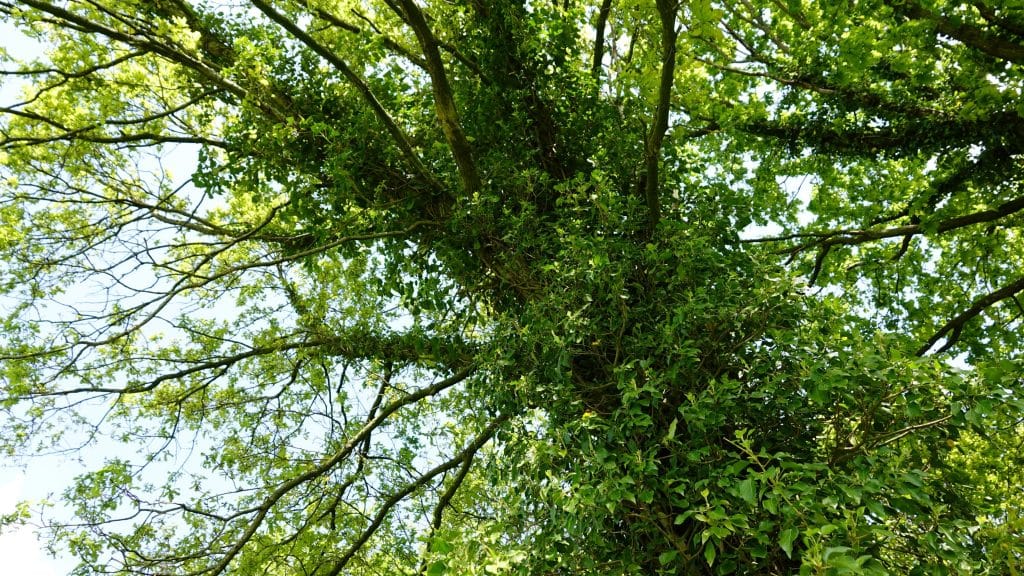
From roadside surveys conducted in recent years, we know that oaks covered with common ivy have significantly fewer oak processionary nests than trees without. The reason for this is not yet entirely clear. The vine may hinder the caterpillars’ movements, or the dense ivy canopy may create a microclimate less suitable for the caterpillars. What we also don’t know yet is whether other butterfly species are affected by the climbing plant.

The ivy experiment
That’s why we set up a new large-scale field trial in 2024 to determine the impact of ivy on caterpillar populations in pedunculate oaks. Caterpillar droppings were collected from trees with and without ivy at ten locations in the Antwerp Kempen region. The droppings were collected in cardboard boxes—the familiar pizza boxes—under the tree, then weighed and compared. We left the boxes for at least 24 hours, and repeated this several times throughout the caterpillar season. In this way, we hoped to determine whether there was a difference between the number of caterpillars in oaks with and without the vine. The research was conducted in collaboration with the University of Antwerp.
So, if you happened to spot a few pizza boxes under a tree during a walk in the Antwerp Kempen region in 2024, know that science was at work!